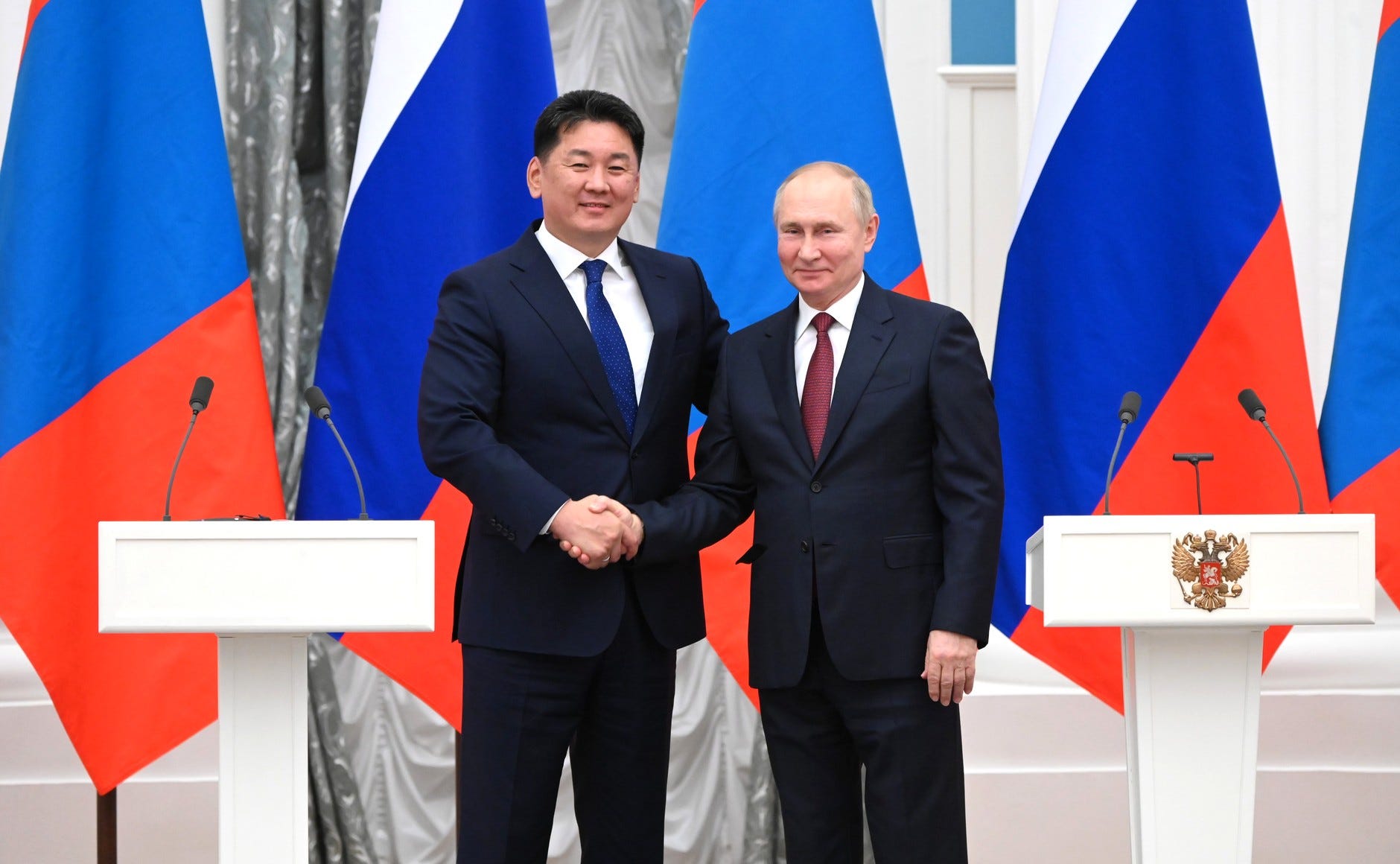
Pragmatism Prevails in Mongolian-Russian Relations

With a December 2024 deadline looming, Mongolia faces a significant decision: to sign or not to sign a trade agreement with the Eurasian Economic Union (EAEU). This bloc, led by Russia and encompassing Belarus, Kazakhstan, Armenia, and Kyrgyzstan, offers the promise of economic integration but may spark apprehension in Western capitals given Russia's ongoing war in Ukraine and the implications for Mongolia's strategic autonomy. This choice exemplifies the complex position Mongolia navigates as it seeks to advance its interests amid great power competition.
For decades, Mongolia has relied almost entirely on Russia for fuel, a legacy of its Soviet past and a lack of domestic refining capacity. This dependence creates an undeniable vulnerability. Should Moscow choose to leverage this reliance, as it has done with natural gas in Europe, Mongolia's economy would face severe consequences.
However, to view the relationship solely through a lens of coercion is to miss a crucial element: Russia, particularly now, embroiled in a war in Ukraine and facing unprecedented pressure on its western borders, derives benefit from stability on its eastern flank. A Mongolia in turmoil, economically or otherwise, would present a strategic problem Moscow can ill afford.